Avery Carter · 21 September 2026
Nighttime Signal Processing: Lantern-Integrated Radar Applications in Precision Farming Techniques
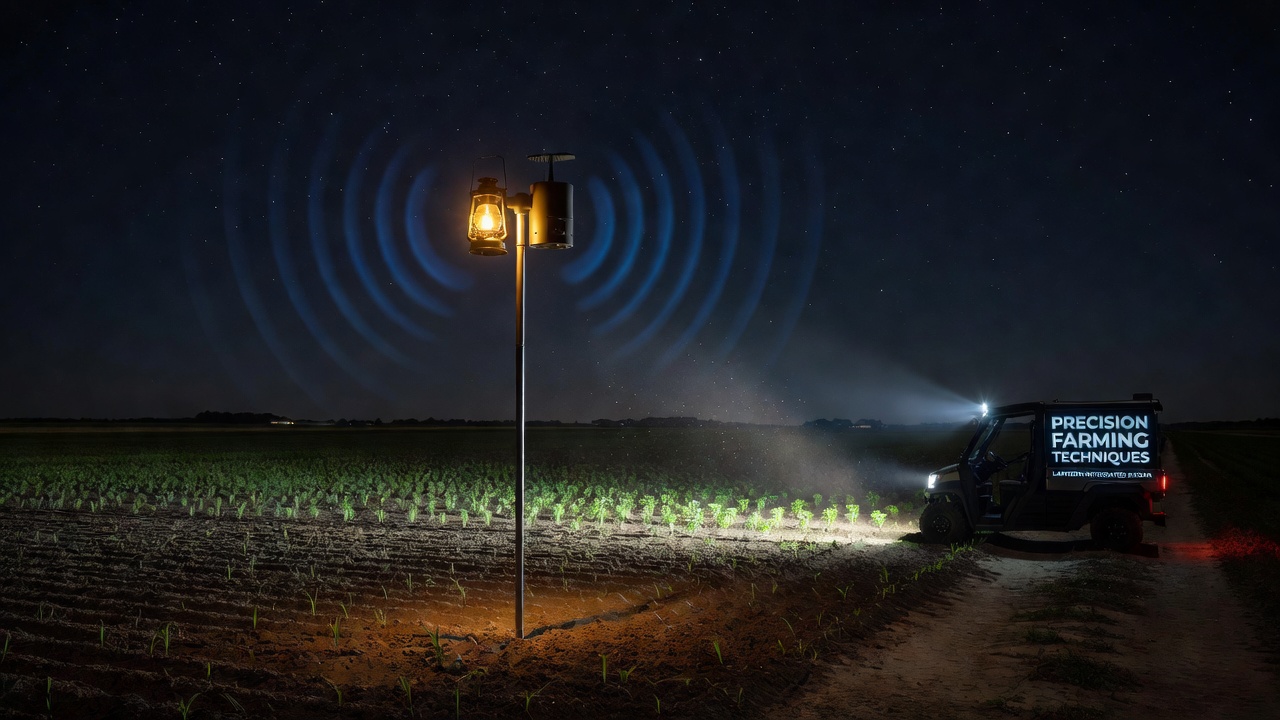
Precision farming operations have incorporated lantern-integrated radar systems that perform continuous nighttime signal processing to monitor crop conditions without relying on daylight hours, and these setups combine low-power radar emitters with traditional lantern housings to scan soil moisture levels, plant biomass density, and insect activity patterns across large fields. Researchers at multiple agricultural institutions have documented how the radar modules emit pulsed signals in the X-band frequency range while the lantern structures provide weatherproofing and elevated mounting points, which allows data collection during periods when optical sensors remain ineffective.
Core Components of Lantern-Integrated Radar Systems
The radar units sit inside modified lantern frames that farmers already deploy for property illumination, and this placement reduces installation costs while the signal processing algorithms filter out interference from nearby light sources and passing vehicles. Engineers design the antennas to operate in short bursts that last only milliseconds, which conserves energy drawn from solar panels attached to the same poles, and data streams travel via low-bandwidth wireless links to central farm management platforms. Studies from Wageningen University have shown that the integrated systems achieve detection ranges of up to 150 meters under clear atmospheric conditions, whereas performance drops only slightly during light rain because the signal processing routines apply adaptive clutter rejection filters.
Signal Processing Methods for Nighttime Data
Raw radar returns undergo several stages of digital filtering before they produce usable maps of field conditions, and these stages include range-Doppler processing that separates moving targets such as nocturnal insects from stationary crop canopies. Machine learning models trained on multi-season datasets classify the reflected signals into categories that indicate water stress or early disease onset, and the models update continuously as new nighttime readings arrive. Observers note that the combination of lantern housings and radar hardware creates a compact unit that requires minimal maintenance beyond occasional lens cleaning, while the processing pipeline runs on edge computing modules located at each pole to reduce latency in alert generation.
Applications in Crop and Soil Monitoring
Farmers use the nighttime radar outputs to schedule irrigation cycles more precisely because the systems detect subtle changes in dielectric properties of soil that occur after sunset when evapotranspiration rates decline. In one documented deployment covering 800 hectares of wheat, the lantern radar network identified patches of compaction that optical drones had missed during daytime flights, and operators then applied targeted tillage only to those zones. Data released in September 2026 by Agriculture and Agri-Food Canada indicated that fields equipped with these integrated units recorded a 14 percent reduction in water usage compared with control plots that relied solely on daytime satellite imagery.
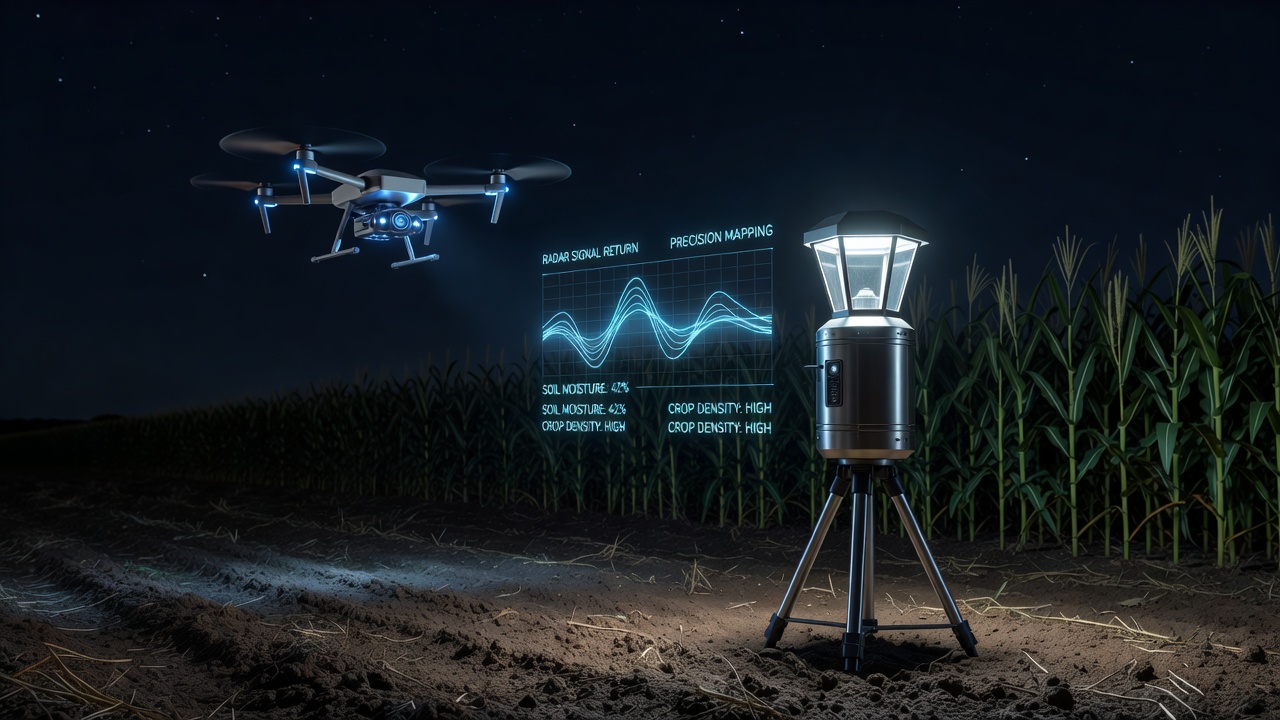
Pest management teams receive alerts when radar signatures match the flight patterns of specific moth species, and this information allows timely application of biological controls rather than broad-spectrum sprays. The signal processing software distinguishes between beneficial pollinators and crop-damaging insects by analyzing wingbeat frequencies embedded in the Doppler returns, and the resulting maps update every 30 minutes throughout the night. Those who manage large-scale operations report that the continuous data flow supports decisions made before dawn, when many pest species remain most active.
Integration with Existing Farm Infrastructure
Many operations already maintain networks of lantern poles for security lighting, and retrofitting these structures with radar modules requires only minor electrical modifications plus software configuration. Power consumption remains low because the radar transmits at duty cycles below 5 percent, and the same batteries that run the lights also supply the sensors. Technicians calibrate each unit seasonally to account for changes in crop height and foliage density, and calibration routines rely on reference targets placed at known distances within the field. According to figures from the European Space Agency's agriculture monitoring program, farms that combined lantern radar with existing weather stations achieved higher correlation between predicted and measured soil moisture values than farms using weather data alone.
Future Developments Expected After 2026
Engineers continue to refine the algorithms that separate useful agricultural signals from environmental noise such as wind-induced leaf movement, and prototype units tested in 2026 incorporated additional frequency bands that improve penetration through dense canopy layers. Regulatory bodies in several countries have begun reviewing spectrum allocation rules that would permit wider deployment of these low-power agricultural radars without interfering with aviation or meteorological services. The modular design of the lantern housings allows incremental upgrades as new processing chips become available, which extends the service life of each installed pole.
Conclusion
Nighttime signal processing through lantern-integrated radar provides precision farming operations with round-the-clock visibility into field conditions that daytime methods cannot capture, and the approach leverages existing farm infrastructure to keep implementation costs manageable. Continued refinement of the processing techniques and expanded regulatory support are expected to increase adoption rates in the years following the September 2026 data releases, while the core principles of combining compact radar hardware with traditional lantern structures remain consistent across different growing regions.